Our Approach to Sustainability.
Luova Hospitality supplies bed linen, towels, filled bedding and protective products to hotels, lodges and hospitality groups, helping them find textiles that meet their quality standards, operational needs and budgets.
In a world where sustainability is increasingly important to hospitality businesses and their guests, we believe comfort and conscience should not be at odds.
Hotels are making significant efforts to improve sustainability across their operations. Yet the textiles they purchase are not always part of that conversation. We believe there is an opportunity to change this.
Where practical, we help hospitality businesses bring their textile purchasing decisions into line with their wider sustainability commitments, offering more sustainably produced alternatives alongside conventional products.
We understand that purchasing decisions involve more than the material itself. Comfort, durability, laundering, availability, price and reliable supply all matter. Working with our manufacturing partners, we help customers find solutions that balance these requirements with their sustainability ambitions.
Our goal is to build lasting relationships with hospitality businesses and contribute to a gradual shift towards more sustainable textile production and purchasing.
We believe better textile choices begin with understanding how products are made, not simply how they are marketed.
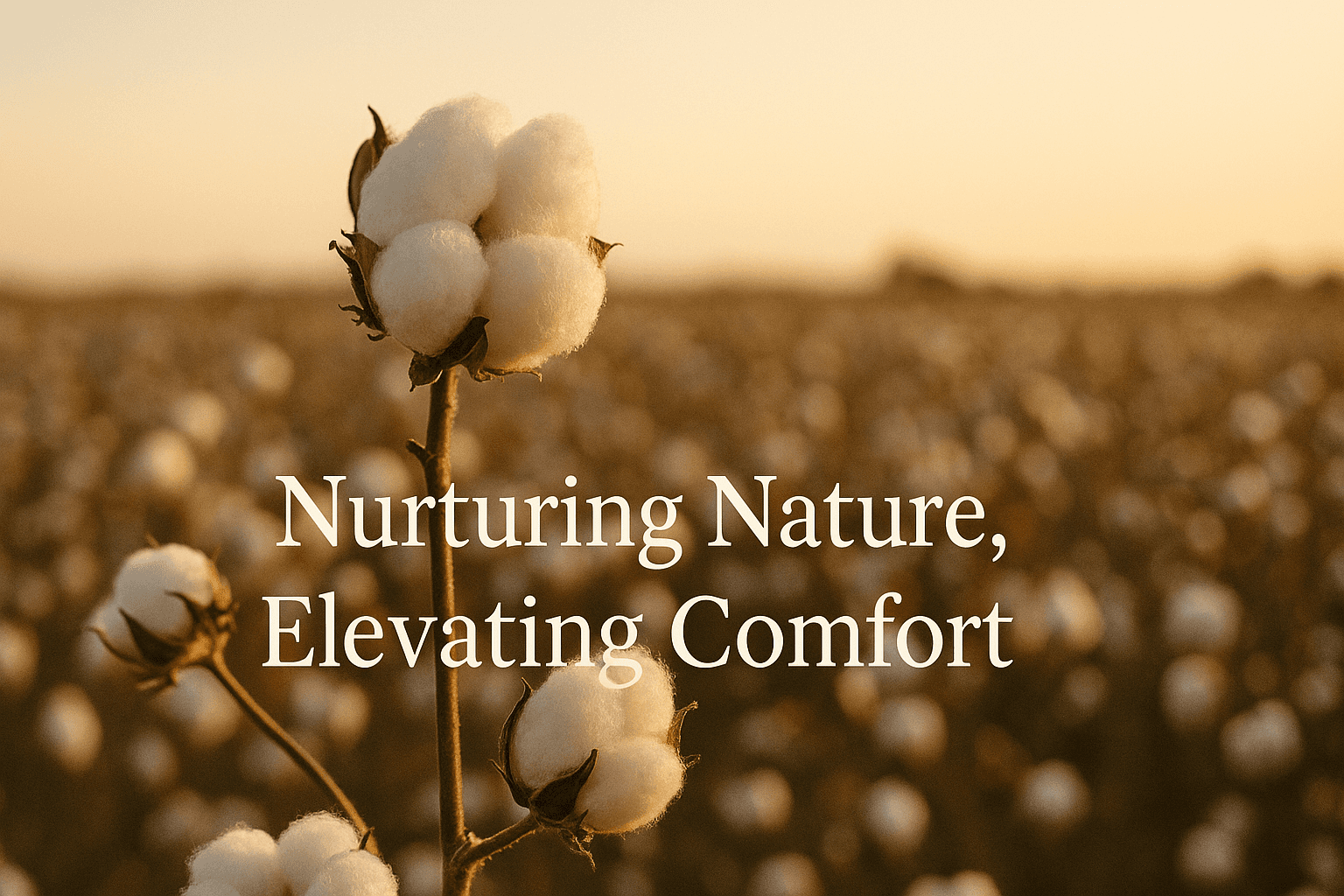
Organic cotton is one option. Its production restricts the use of synthetic agricultural pesticides and fertilisers, helping address some of the environmental and health concerns associated with conventional cotton farming.
Other approaches, including Better Cotton and recycled materials such as recycled cotton and polyester, can also play a role in improving how textiles are produced and sourced.
Through our manufacturing partners, we aim to offer a growing range of products made using these materials and sourcing approaches. We also consider relevant textile certifications and testing standards, including OEKO-TEX STANDARD 100, which assesses textiles for specified harmful substances.
No single fabric or material is the right answer for every application. Environmental outcomes vary depending on farming practices, manufacturing processes, product lifespan and local conditions.
Our approach is therefore to encourage more responsible choices wherever practical, while being transparent about the options and their limitations.
Our Approach to Sustainability.
Better Textile Choices. A More Sustainable Future.
Better Textile Choices. A More Sustainable Future.
Better Textile Choices. A More Sustainable Future.
Better Textile Choices.
A More Sustainable Future.
Our Approach to Sustainability.
Our Approach to Sustainability.